About Router CSI Lab: author, lab environment and editorial principles
Router CSI Lab is an independent, single-maintainer technical notebook. It is not a vendor site, news aggregator or medical product. It focuses on one question: can an ordinary researcher obtain, verify and use Wi-Fi CSI repeatedly on a consumer router?
The project was created and is maintained by Wu Jun. The same author is responsible for the writing, code, experiment record and corrections. Content that cannot be reproduced or whose sources disappear should be revised, not protected by deleting criticism.
1. Scope
The site covers:
- GL-MT6000 / MT7986 with OpenWrt and mt76: build, flash and capture;
- raw UDP/IQ format, parsers, heatmaps and motion metrics;
- 5 GHz / 2.4 GHz, 40 MHz / 80 MHz, snapshot rate and chain selection;
- Nexmon, ESP32 and other routes with explicit limits;
- Raspberry Pi and Home Assistant deployment;
- Wi-Fi performance when CSI coexists with normal home traffic.
It does not cover medical diagnosis, certified security products, identity recognition, commercial through-wall imaging or unsupported "spatial intelligence" marketing. The field survey by Ma et al. provides background [1], but a survey cannot replace a measurement on this device.
2. Why start with a router
| Route | Advantage | Cost |
|---|---|---|
| Papers/simulation | strong theory and controlled variables | reproduction often depends on the original lab |
| ESP32 | cheap and quick | one area; packet-rate and LTF limits |
| Nexmon + Raspberry Pi | flexible channel/bandwidth | specific Broadcom chip and firmware |
| Router + mt76 | 24/7 power, central location, normal home networking | flashing, driver patch and performance tuning |
This project uses a GL-MT6000 because it can serve as both a home router and an experiment platform. The measured mode is 80 MHz, 256 subcarriers and 2 Tx × 4 Rx (8 chains). That is not a free capability: firmware, ATF and client bandwidth can all affect throughput or rate recovery.
3. Lab hardware and first-party evidence
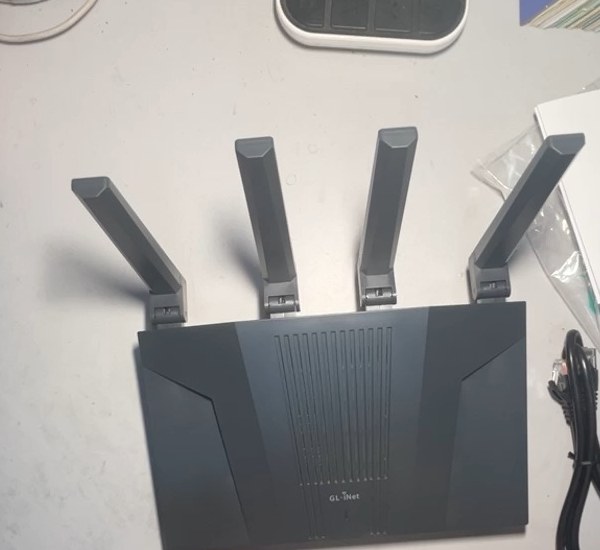
The actual GL-MT6000 (Flint 2) used for the 5 GHz HE80 measurements.
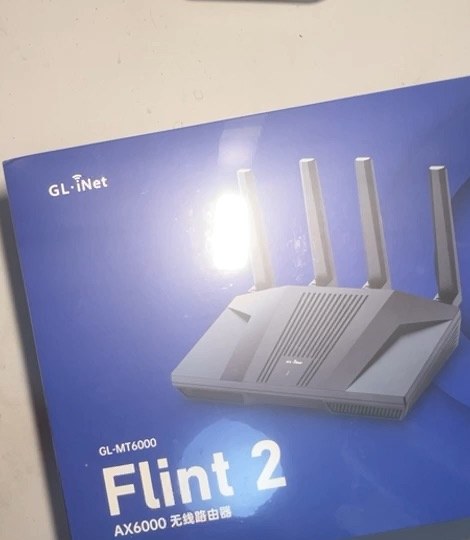
A retail GL-MT6000 (Flint 2 / AX6000), not an engineering sample.
An experiment record normally includes:
| Item | How this site records it |
|---|---|
| Router | model, retail unit, antenna and interface photos |
| OS | OpenWrt/Linux version, Wi-Fi firmware and MD5 |
| Radio | channel, HE80, subcarriers, chains, RSSI/SNR |
| Raw data | record count, duration, parts and SHA-256 |
| Analysis | Python scripts, dependencies, summaries and figures |
| Failure | failed commands, anomalies, unresolved causes and rollback |
First-party data is published on the dataset page. The 10-minute capture contains 57,293 chain records over about 600 seconds [2]; the toolkit and checksums are published separately [3].
4. Author and responsibility
Wu Jun is the author and maintainer, focused on Wi-Fi sensing, embedded systems, OpenWrt and reproducible experiments. This site does not claim medical, clinical or security certification. Technical judgments come from public sources, code, device logs and reproducible measurements.
The author is responsible for:
- choosing the experiment and its risk boundaries;
- checking citations, data and commands;
- reporting failures and uncertainty;
- maintaining scripts, checksums and corrections;
- handling privacy and commercial disclosure.
AI-assistance boundaries are documented in the methodology. AI is not a source and cannot replace a real measurement or author responsibility.
5. Editorial principles and evidence
- external conclusions return to papers, standards or official documentation where possible;
- first-party conclusions can be rebuilt from data, scripts and commands;
- evidence is registered A–E with an explicit scope;
- preprints, community projects and vendor claims are labelled by status;
- stars, citation counts and slogans are not treated as performance proof;
- failed experiments and unresolved causes remain in the record;
- substantive revisions update the date and, when needed, publish a new data version.
Automated builds, link checks and mobile QA prove that the site works; they do not prove a scientific conclusion. The two validation processes are recorded separately.
6. Funding, advertising and independence
Possible funding sources are:
- display advertising, including Google AdSense;
- paid downloads of independent handbooks or toolkits;
- future clearly labelled sponsorship or affiliate links.
Commercial revenue cannot buy a favourable conclusion, suppress a negative measurement or change an evidence
grade. There are no affiliate promotions at the time of this update. If that changes, the link will carry
rel="sponsored" and a clear disclosure. Product and pricing pages may be temporarily noindex during review;
free technical articles are unaffected.
7. Privacy and ethics
Wi-Fi CSI uses no camera or microphone, but it can still reveal activity, routines or whether someone is home. Therefore:
- deploy only in a space you own or are authorised to monitor;
- inform household members and provide an opt-out;
- do not use it for covert surveillance, identity recognition or non-consensual profiling;
- anonymise MAC addresses, location and home-network details before publication;
- never expose analysis or MQTT/REST services directly to the public internet;
- medical, fall and security claims require human review and a failure strategy.
8. Public record
| Date | Milestone |
|---|---|
| 2026-10-10 | Completed the 10-minute GL-MT6000 capture (57,293 chain records) |
| 2026-10-11 | Site and first reproduction guides published |
| 2026-10-17 | The 10-minute dataset received its Zenodo DOI |
| 2026-10-29 | Continued bilingual expansion, photos, dataset documentation and methodology |
| 2026-10-31 | Published the public MIT toolkit repository and v0.1.2 Release |
| 2026-11-02 | Zenodo reported 51 downloads and 44 views (41 unique views) for the dataset |
Dataset: https://doi.org/10.5281/zenodo.23434789 (CC BY 4.0)
9. Contact and corrections
- Email: okwujun@gmail.com
- Public GitHub profile: github.com/jjjwu
- Open-source toolkit repository: github.com/jjjwu/router-csi-toolkit
- Dataset: doi.org/10.5281/zenodo.23434789
- Correction log: what changed and why
- Corrections, reproduction questions, privacy requests and contributions: include the page URL, paragraph and supporting evidence in your email
Disclaimer
Flashing firmware and long-running capture can damage hardware or lose data. Back up, rehearse rollback and confirm that you have permission to operate the device. This site is provided "as is" and is not medical, legal, security-certification or purchasing advice.
References and data sources
Every external claim carries a source and an evidence grade (grading scheme). Grade E marks first-party, reproducible measurements from this project.
- Grade A · standard/review
WiFi Sensing with Channel State Information: A Survey
W. Ma, W. Zhou, X. Wang · ACM Computing Surveys · 2019
doi:10.1145/3310194 · citations 857 · verified: CrossRef API, 2026-10-11 · The field's most-cited CSI sensing survey (857 citations, verified via CrossRef). - Grade E · first-party measurement
This project's 10-minute raw capture (57,293 records / 600.0 s, SHA-256 00373f83…95e2)
Router CSI Lab · 2026
okwujun.pw/en/datasets/ · verified: Reassembled chunks verified byte-identical (2026-10-11) · The local raw master has SHA-256 00373f83…95e2; the public de-identified derivative has SHA-256 527466ce…a440. They must not be confused. - Grade E · first-party measurement
Router CSI Toolkit — capture/analysis/watchdog scripts (MIT, public repository)
Router CSI Lab · 2026
github.com/jjjwu/router-csi-toolkit · verified: GitHub API verified the public repository, capture-quality preflight, successful CI and the v0.1.3 release on 2026-11-02; the archive SHA-256 is 59f144c0…adea7 · The public repository includes a dependency-free capture preflight; the browser checker uses the same container definition and evidence boundaries. - Grade E · first-party measurement
Router CSI Lab — GL-MT6000 (MT7986) Wi-Fi CSI dataset, 10 s sample + 10 min capture
Router CSI Lab · 2026
doi:10.5281/zenodo.23434789 · verified: CC BY 4.0; SHA-256 published; Zenodo DOI 10.5281/zenodo.23434789 · The dataset has a Zenodo DOI (10.5281/zenodo.23434789) and can be cited directly.